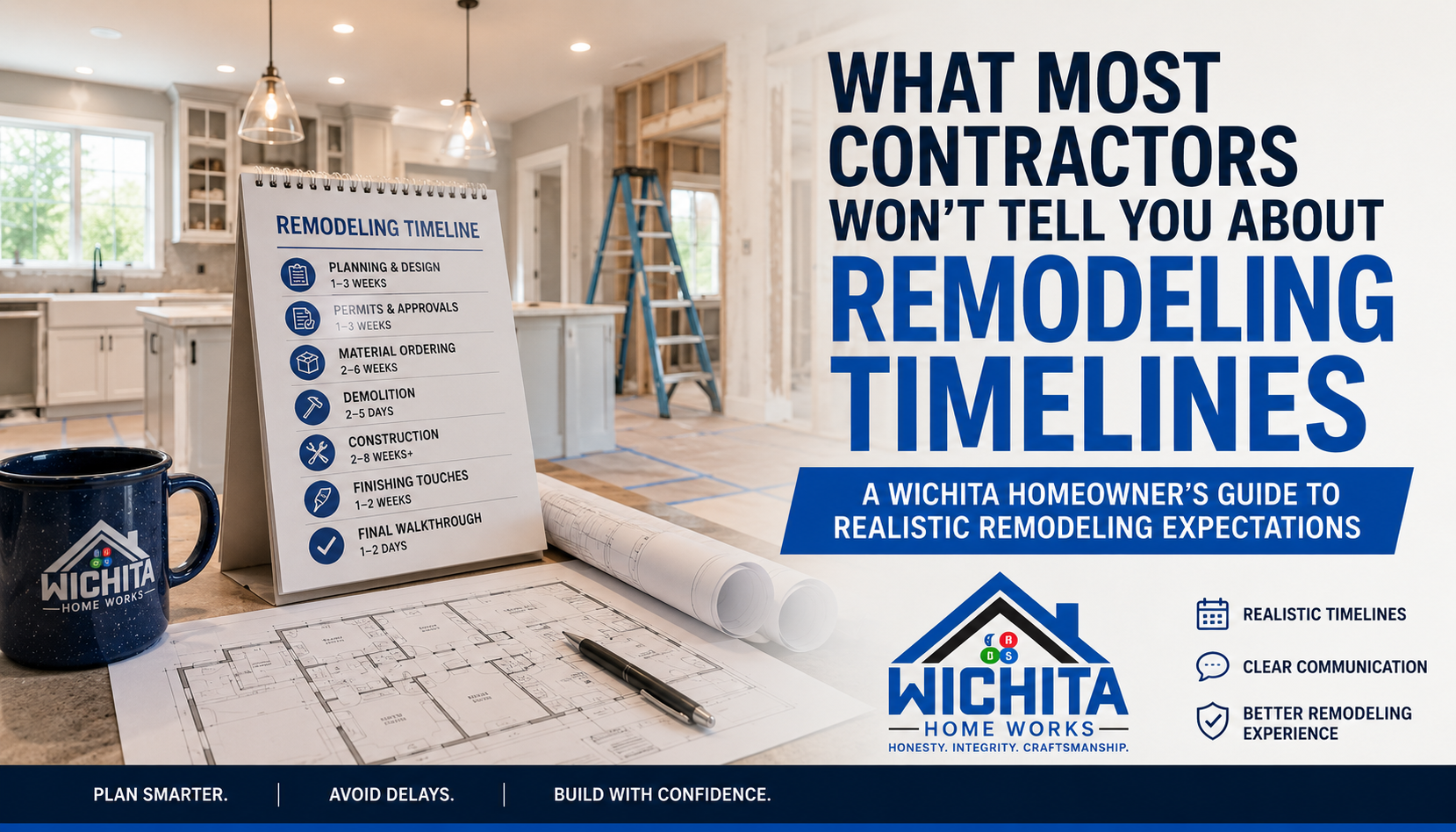
When you decide to remodel your home, one of the first questions you probably ask is, “How long will this take?” That is a completely reasonable question. A remodel affects your routine, your family, your schedule, and the way you use your home every day.
The honest answer is that remodeling timelines are rarely one-size-fits-all. A simple bathroom update may move quickly, while a full kitchen remodel, basement finish, or room addition can involve many more decisions, inspections, materials, and moving parts.
That is why the best contractors do not simply promise the fastest timeline. They help homeowners understand what affects the schedule, where delays can happen, and how good planning can create a smoother experience from start to finish.
In this guide, we will walk through what most contractors will not tell you about remodeling timelines so Wichita homeowners can plan with more confidence and fewer surprises.
Key Takeaways
- Every remodeling project has a unique timeline.
- Planning before construction starts is part of the overall schedule.
- Permits, inspections, and material lead times can affect progress.
- Hidden issues inside older homes can create timeline changes.
- Homeowner decisions can speed up or slow down a remodel.
- Clear communication matters as much as the original schedule.
- Good planning creates a better remodeling experience, not just a faster one.
Remodeling Timelines Are One of the Biggest Sources of Stress
Most homeowners are not just asking about the timeline because they are curious. They are asking because they need to plan their life around the work.
They want to know:
- When will the kitchen be usable again?
- How long will the bathroom be out of service?
- When will the dust, noise, and disruption end?
- Will the project be done before guests arrive, school starts, or the holidays?
- What happens if something unexpected comes up?
Those are practical concerns. Remodeling is personal because it happens inside the place where you live. A realistic timeline helps you prepare emotionally, financially, and logistically.
The problem is that some timelines are presented too simply. A contractor may say a project will take “a few weeks,” but that can mean different things depending on the scope, materials, permitting, inspections, and whether decisions are already finalized.
A better conversation starts with honesty. The goal is not to create fear. The goal is to help you understand what actually affects the schedule.
1. Why Every Remodeling Project Has a Different Timeline
There Is No Universal Remodeling Schedule
Two projects can look similar on the surface but have completely different timelines once the details are understood.
For example, one bathroom project may only involve new paint, fixtures, flooring, and a vanity replacement. Another bathroom project may involve a custom shower, tile work, plumbing changes, electrical upgrades, ventilation improvements, and inspections.
Both are “bathroom remodels,” but they are not the same project.
Remodeling timelines are affected by:
- Project size and scope
- Design complexity
- Age and condition of the home
- Structural, plumbing, or electrical changes
- Permit and inspection requirements
- Material availability
- Custom cabinetry, tile, fixtures, or specialty products
- Weather conditions for exterior work or additions
- How quickly selections and decisions are made
This is why a contractor should never give a serious timeline without first understanding the actual scope of work. A realistic schedule is built around the project, not around a generic answer.
2. Typical Remodeling Timelines for Common Projects
Every home is different, but it can still be helpful to understand the general phases involved in common remodeling projects.
Kitchen Remodeling Timeline
A kitchen remodel often involves more moving parts than homeowners expect. Cabinets, countertops, appliances, plumbing, electrical, lighting, flooring, and layout decisions all affect the schedule.
A kitchen remodel may include:
- Planning and design
- Material selection and ordering
- Demolition
- Electrical and plumbing work
- Cabinet installation
- Countertop templating and installation
- Flooring, backsplash, painting, and finishing details
You can learn more about Wichita Home Works’ kitchen services here: kitchen remodeling in Wichita.
Bathroom Remodeling Timeline
Bathroom remodels can range from straightforward updates to highly detailed projects involving tile, plumbing, shower systems, ventilation, lighting, and layout adjustments.
A bathroom remodel may include:
- Design and product selections
- Demolition
- Plumbing or electrical updates
- Waterproofing and tile installation
- Vanity, fixture, mirror, and lighting installation
- Final finishing and cleanup
Learn more about bathroom remodeling here: Wichita bathroom remodeling.
Basement Finishing Timeline
Basement finishing often involves framing, electrical work, insulation, drywall, flooring, lighting, trim, and sometimes plumbing if a bathroom or wet bar is included.
Because basements may involve egress, moisture considerations, and code requirements, careful planning matters. You can explore this service here: basement finishing in Wichita.
Room Addition Timeline
Room additions usually take longer than interior remodels because they may involve design, engineering, permits, foundation work, framing, roofing, siding, utilities, insulation, drywall, and interior finishes.
A room addition is closer to building a new section of the home than simply updating an existing room. Learn more here: room additions in Wichita.
3. What Happens Before Construction Even Starts
The Planning Stage Is Part of the Timeline
One thing many homeowners do not realize is that the remodeling timeline begins before demolition. A well-run project needs planning before tools come out.
Pre-construction planning may include:
- Initial consultation and project goals
- Design and layout planning
- Budget conversations
- Material and finish selections
- Estimate review and scope clarification
- Permit applications when required
- Scheduling subcontractors and materials
It can be tempting to rush this stage, but rushing planning often creates problems later. The more clearly a project is defined before construction begins, the smoother the construction phase tends to be.
If you are preparing for the first step, this related article may help: Your First Step to a Home Remodel: A Wichita Home Works Consultation Explained.
4. Why Remodeling Delays Happen
Delays Do Not Always Mean Something Is Going Wrong
No homeowner wants delays. No good contractor wants them either. But remodeling involves real homes, real materials, real schedules, and sometimes real surprises.
Some delays are preventable. Others are outside anyone’s full control. What matters is how clearly your contractor communicates when something changes.
Common causes of remodeling delays include:
- Permit processing and inspections
- Weather conditions for exterior projects, roofing, windows, or additions
- Material backorders or product lead times
- Custom cabinetry, countertops, tile, or fixtures
- Hidden damage discovered during demolition
- Electrical, plumbing, or structural issues
- Changes to the project scope
- Delayed homeowner selections or approvals
For example, if a wall is opened and old wiring, water damage, or poor previous workmanship is discovered, the contractor may need to pause, explain the situation, and adjust the plan before moving forward.
That can affect the schedule, but ignoring the issue would be worse. A trustworthy contractor will address problems properly instead of covering them up to hit an unrealistic deadline.
For additional local insight, read Understanding Wichita’s Building Codes and Permits: A Homeowner’s Guide.
5. The Biggest Timeline Mistakes Homeowners Make
Homeowner Decisions Can Affect the Schedule
This is not about blaming homeowners. It is about helping you understand how your decisions can either keep a project moving or slow it down.
Common timeline mistakes include:
- Delaying selections: Waiting too long to choose tile, fixtures, flooring, cabinets, or paint can hold up ordering and installation.
- Making last-minute changes: Changing the layout, materials, or finishes after work begins can affect labor and scheduling.
- Expanding the scope mid-project: Adding more work may be a good decision, but it usually adds time.
- Responding slowly to questions: Contractors often need timely approvals to keep work moving.
- Choosing unavailable products: Some materials or fixtures may have long lead times.
The smoother projects usually happen when homeowners make key decisions early, ask questions before construction starts, and understand how changes affect the schedule.
Budget and timeline often go together. For more on that topic, read Why Remodeling Projects Go Over Budget and How to Avoid It.
6. What Good Remodeling Communication Looks Like
Communication Is More Important Than Most Homeowners Realize
Most homeowners can handle an adjusted timeline if they understand what is happening and why. What creates frustration is silence, vague answers, or feeling like no one is taking responsibility.
Good remodeling communication should include:
- Clear expectations before the project begins
- Updates when the schedule changes
- Explanations when delays occur
- Honest conversations about tradeoffs
- Documentation for change orders
- A clear point of contact for homeowner questions
This is one of the reasons contractor selection matters so much. You are not just hiring someone to build or remodel. You are hiring someone to guide you through a process.
If you have not already read it, this article is a helpful companion: How to Choose a Remodeling Contractor Without Getting Burned.
7. How Homeowners Can Help Keep Their Remodel Moving
Practical Steps for a Smoother Project
You cannot control every part of a remodeling timeline, but you can take steps that make a meaningful difference.
Finalize Selections Early
Cabinets, countertops, tile, flooring, fixtures, paint colors, hardware, and lighting can all affect the schedule. The earlier these decisions are made, the easier it is to plan the project accurately.
Respond Quickly to Questions
During a remodel, your contractor may need approvals or decisions to keep progress moving. A quick response can help avoid unnecessary downtime.
Avoid Unnecessary Mid-Project Changes
Some changes are worth making. But every change should be considered carefully because it can affect the budget, schedule, labor, and material ordering.
Prepare Your Home Before Work Starts
Move personal items, protect valuables, plan for temporary kitchen or bathroom arrangements, and talk with your family about what to expect during construction.
Look at Completed Projects for Inspiration Early
Reviewing real project examples before the remodel starts can help you make better design decisions. You can explore completed Wichita Home Works projects here: project showcases.
What a Healthy Remodeling Timeline Conversation Should Feel Like
A timeline conversation should not feel rushed or vague. You should not feel like you are being given a best-case scenario just to move the conversation forward.
A healthy conversation should help you feel:
- Informed about the major phases of the project
- Prepared for the decisions you need to make
- Aware of what could affect the schedule
- Comfortable asking questions
- Confident that the contractor will communicate clearly
A contractor who promises an unrealistically fast timeline may not be doing you a favor. A better contractor gives you a realistic picture and helps you understand the path forward.
The Wichita Home Works Approach
Building Trust Through Planning, Communication, and Craftsmanship
At Wichita Home Works, we believe homeowners deserve honest expectations before a project begins. A remodel is too important to build around guesswork, pressure, or unrealistic promises.
Our approach is built around clear communication, careful planning, and respect for the home you live in. That means helping you understand the process, answering questions, and giving you realistic guidance before construction starts.
Learn more about our company, values, and team here: about Wichita Home Works.
A Successful Remodel Is More Than Just Speed
Everyone wants a remodeling project to move efficiently. That makes sense. But the best remodeling projects are not always the ones rushed to the finish line.
A successful remodel is one where the planning is clear, the work is done properly, communication stays consistent, and the homeowner understands what is happening along the way.
Fast work is not the same as good work. A realistic timeline protects the quality of the project and helps prevent unnecessary stress.
If you are planning a remodel in Wichita and want honest guidance about timelines, budgeting, and expectations, Wichita Home Works would be happy to help.
Frequently Asked Questions
How long does a kitchen remodel usually take?
Kitchen remodel timelines vary based on scope, layout changes, cabinet lead times, countertops, plumbing, electrical work, and finishes. A simple update may take less time, while a full kitchen remodel usually requires more planning and coordination.
How long does a bathroom remodel take?
A bathroom remodel timeline depends on the size of the bathroom, whether plumbing is moving, tile complexity, product availability, and the condition of the existing space.
Why do remodeling projects get delayed?
Remodeling projects may be delayed by permits, inspections, weather, material backorders, hidden damage, structural issues, change orders, or delayed homeowner selections.
Can homeowners cause project delays?
Yes. Delayed selections, slow approvals, last-minute changes, unavailable materials, or expanding the scope during construction can all affect the timeline.
What happens if materials are backordered?
If materials are backordered, the contractor should communicate the issue, discuss alternatives when possible, and adjust the schedule based on availability.
How do permits affect remodeling timelines?
Some projects require permits and inspections. Processing times and inspection schedules can affect when certain phases of work can begin or continue.
Can a remodel finish earlier than expected?
Sometimes, but homeowners should not plan around best-case scenarios. A realistic schedule is safer than assuming everything will move faster than expected.
How can I help keep my remodeling project on schedule?
Make selections early, respond quickly to questions, avoid unnecessary mid-project changes, prepare your home before work begins, and communicate clearly with your contractor.